Continuing the typological dilemma of the group exhibition vs. the solo show, and acknowledging the distinct boundaries and preferences held by the practitioners who typically organise such events, a group exhibition is almost inconceivable without a theme external to the subject matter itself, to which the artworks are subordinated; as has often been remarked, they are pinned down like a collection of distinctively colourful insects in a display case. Rarer and harder to conceive is an approach that originates from within the works themselves, given the stylistic diversity, the aesthetics of inaccessibility, and the autonomy of individuation characteristic to the contemporary art object. One particular strategy we see prevailing is that of framing the exhibition around a broad theme, almost invariably drawn from the fields of gender studies, feminism, or ecology. The question I put to you, seasoned figures active in the exhibition circuit both here and abroad, is the same one raised by critics across the Atlantic in the early 1960s, just as these types of events were beginning to become institutional hallmarks: Have you seen many, or even just one truly noteworthy, anthropologists, sociologists, environmental specialists, behavioral psychoanalysts, or whatever other kinds of –ogists participating with genuine interest, only to subsequently conduct studies and formulate questions and theories, even flawed ones, based on an exhibition, whether here or elsewhere? Let me tell you: you haven’t.
Another strategy is to structure the exhibition around a central motif-leitmotif. I recall here an exhibition proposed and organised by Radu Pandele a few years ago at the ETAJ gallery, which, simply and enticingly, took Bread as both its theme and title. Much the same applies to the exhibition at hand, proposed, as the gallery text reveals, by “an anthropologist (Niculescu), an artist-curator (Cupcencu), and a visual artist with experience in the beauty industry (Aristotel).” The exhibition avoided the allure of broad anthropological or sociological generalisations, focusing instead on a specific, clearly defined object, yet one that is compelling both from the perspectives of the aforementioned fields and due to its ubiquitous presence: hair.
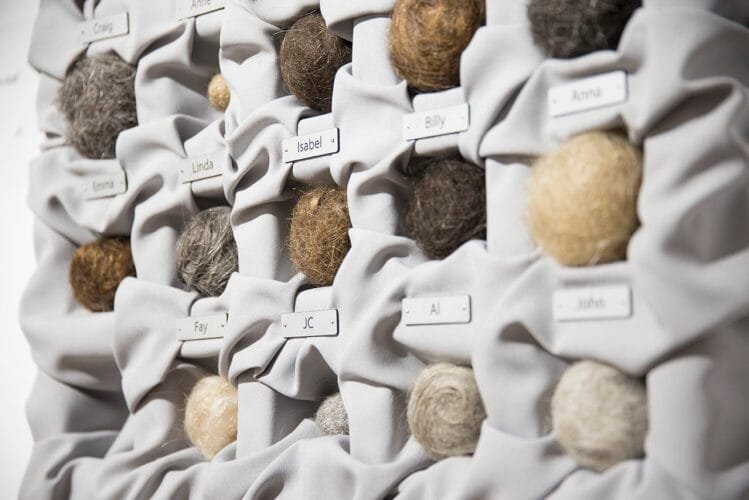
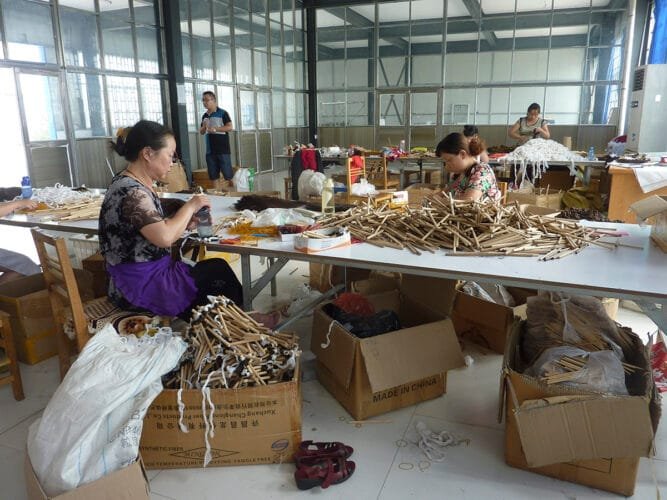
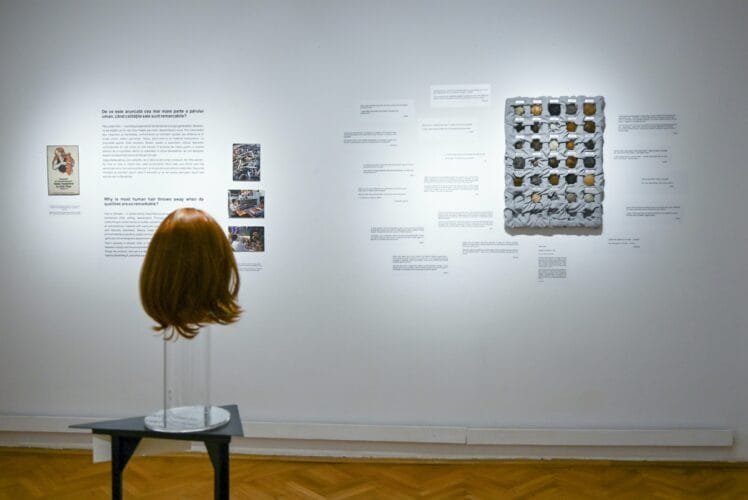
The exhibition takes as its starting point the study “Entanglement: The Secret Lives of Hair” (Oneworld Publications, 2016) by Emma Tarlo, an anthropologist who actually collaborated on the creation of the antechamber adjacent to the main exhibition space, arranged as a socio-anthropological Wunderkammer, which maps the global circuits of the human hair trade. The publication, like Anna Tsing’s “The Mushroom at the End of the World,”—released a year earlier and heavily promoted within both anthropology and the interdisciplinary visual arts circuit (with exhibitions dedicated to it globally and locally)—offers a fresh perspective on the anthropology of mobility. Both studies redefine the field by tracing seemingly marginal commodities [hair and the matsutake mushroom], where the circulation of the object becomes a veritable anthropological superstructure, revealing the diversity of human societies and the ways in which we generate value at the intersection of labor, survival, and ritual.
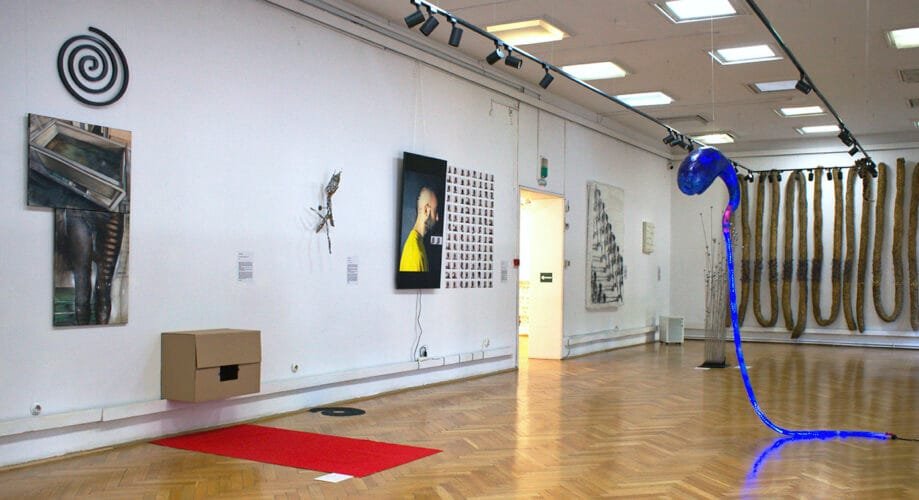
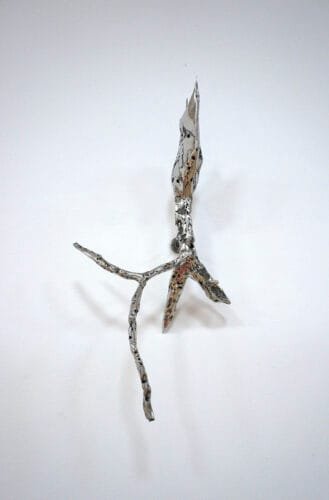
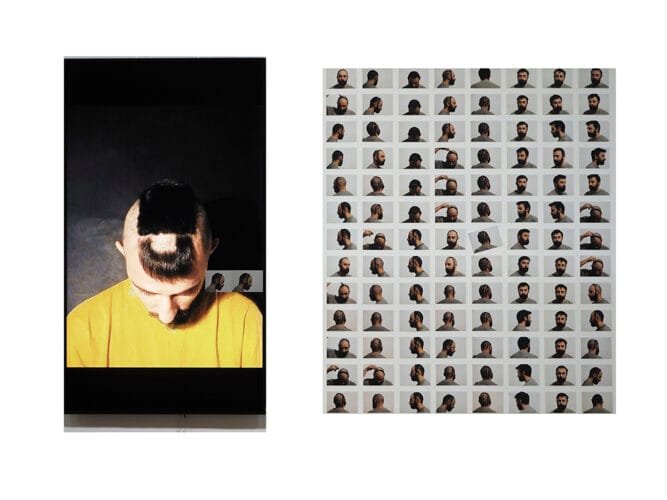
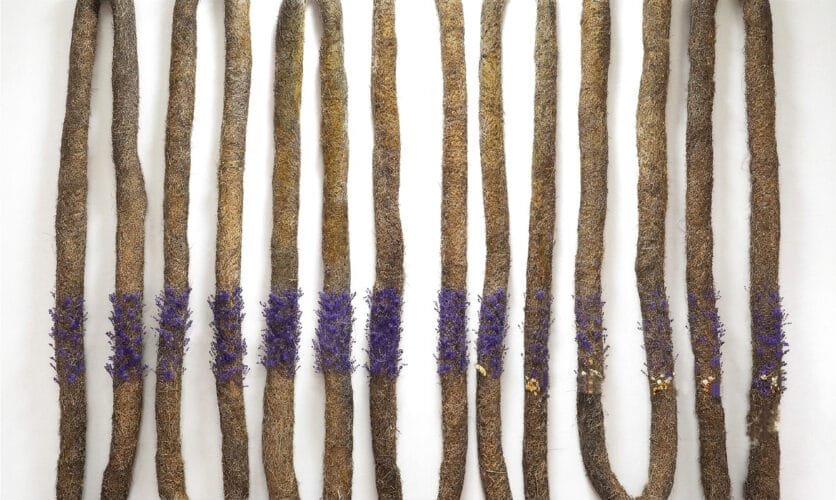
While the selection of artists is generous and egalitarian in terms of gender representation and generational participation, it falls short regarding regional representation, an essential aspect of any group exhibition, I believe, and all the more so for one designed for a museum. The majority of exhibitors come from central Bucharest, joined by a few international artists, whereas the rest of the national scene is merely sketched out: only one artist lives and works in Brașov (Aristotel), and likewise, only one represents Cluj (Waldorf). The majority of the exhibitors come from a centre such as Bucharest, joined by a few international artists, while the rest of the national scene is barely represented: only one artist lives and works in Brașov (Aristotel), and likewise, only one represents Cluj (Waldorf). A key strength is that the works on display were largely created specifically in response to the exhibition’s particular concept (Aristotel, Băltan, Cupcencu, Neagoe, Oană, Popescu, Ranga, Waldorf). Other works were either selected based on themes within the artists’ bodies of work or represent recontextualisations of existing pieces in light of the exhibition’s theme (Lucaci, Saint Machine, Zidaru). Given the predominance of works created specifically for the exhibition, as well as the large number of participating artists, the resulting contextualisations varied in success, ranging from natural to forced, and from focused to tangential. Thus, much like in the aforementioned anthropological study, the many facets of this living material are captured, addressing its agency, the processes involved, the economics, the symbolism, and simply the materiality of hair. Separate from the exhibition’s core, in an antechamber, as previously mentioned, we find the anthropological research conducted by Emma Tarlo across locations such as India, Myanmar, China, the Americas, and Europe; this is presented through documentary photographs, personal accounts, objects, documents, and, of course, hair, all within a participatory installation that invites the public to fill the empty racks. This project also formed the basis of the Hair! Human Stories exhibition, created by the researcher in London in 2018, which can be considered the driving force behind the current exhibition.
In this same context of representativeness, and considering the generous collaborative nature of the project, both in terms of authorship and exhibition production (a generosity reflected in the diversity of media and the interdisciplinary approach to the subject), I fail to understand the persistence of that prevailing trend (a quasi-monopoly, even without specific statistics) of subsuming a group exhibition, for promotional purposes, under the single image of one artist (in this case, Al. Ranga’s work). The poster and visual identity ought to be a theme in their own right, serving as yet another variation on the subject proposed for exploration and presentation.
In conclusion, this is an exhibition grounded in solid research (evident in the detailed labels and informative texts provided in the gallery) and, notably, it benefited from the participation and guidance of an internationally renowned anthropologist whose own research underpins the exhibition. Thus, it is not merely a superficial take on trendy topics, as exhibitions in this field often are, but rather an exhibition that could have afforded the same level of care to the composition of its artistic component, particularly regarding selection and representativeness.
* In English, the expression “it’s hairy” is used to describe something dangerous or fraught with risk, akin to the Romanian idiom “e groasă” (it’s a sticky situation). Consequently, “not hairy” signifies something safe or validated.
“Hair! Hair! Hair! Contemporary Art & Anthropology” [Museum of Art Brașov, in collaboration with Centre for Visual and Digital Anthropology, 12.06–26.07.2026].
Artists: Alexandru Ranga, Beniamin Popescu, Diana Oană, Dumitru Gorzo, Emma Tarlo, Elena Waldorf, George Soare, Ioana Băltan, Jenni Dutton, Marina Aristotel, Mihai Zgondoiu, Mircea Modreanu, Misha Diaconu, Nora Cupcencu, Petru Lucaci, Radu Pandele, Răzvan Neagoe, Saint Machine, Victoria Zidaru. Curators: Gabriela Nicolescu (project curator, anthropologist), Nora Cupcencu (contemporary art section curator), Marina Aristotel (assistant curator).


POSTED BY
Horațiu Lipot
Horațiu Lipot (b. 1989, Alba Iulia) is a curator and cultural journalist. As of 2021, he works as an independent curator, collaborating with venues either from the ON or OFF art- scene in Bucharest, ...
Comments are closed here.