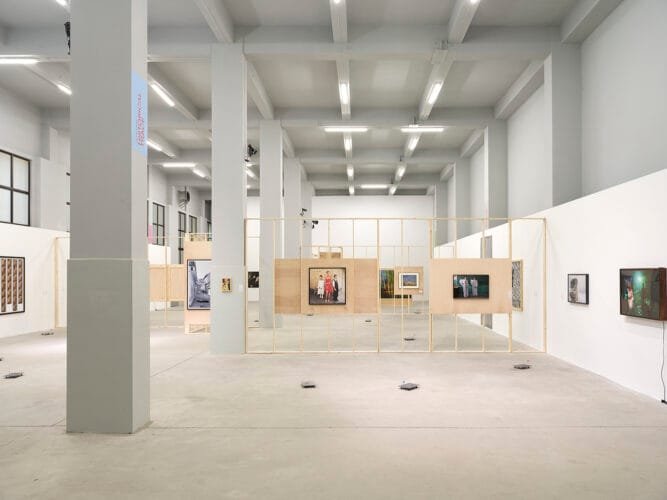
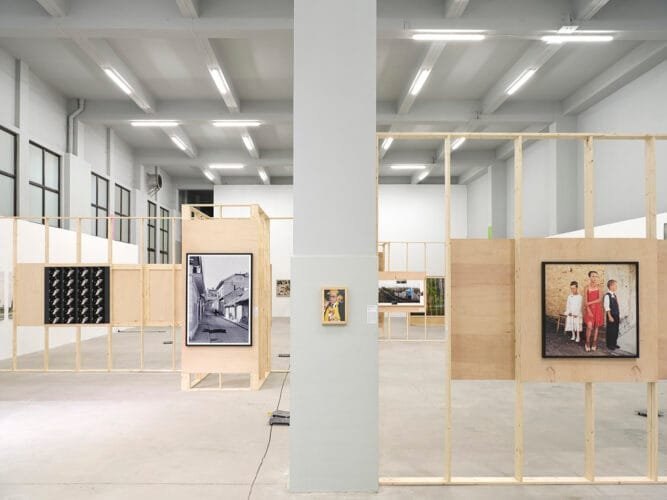
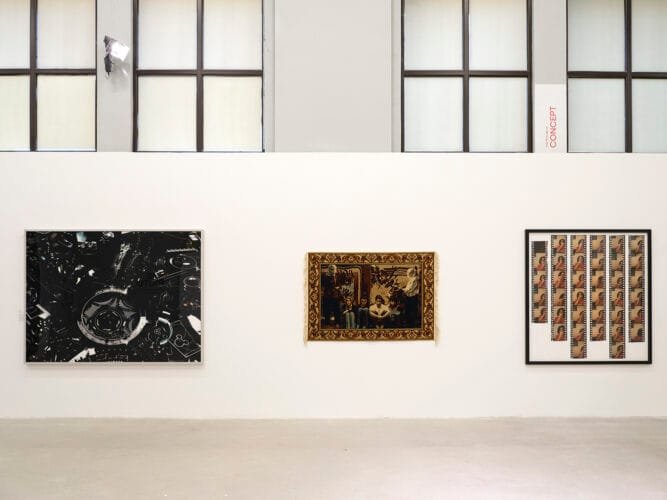
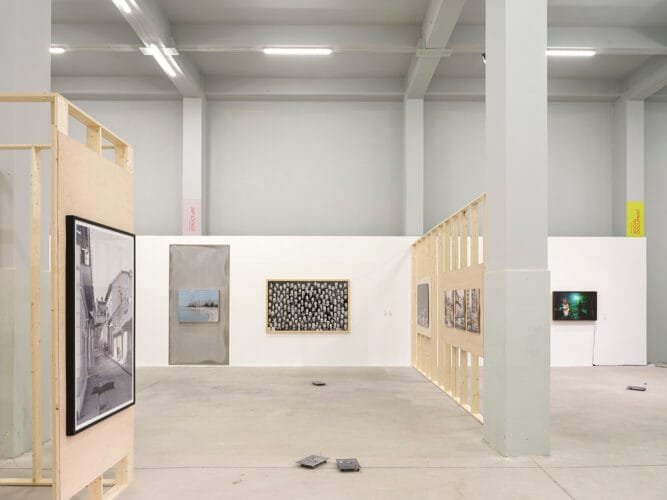
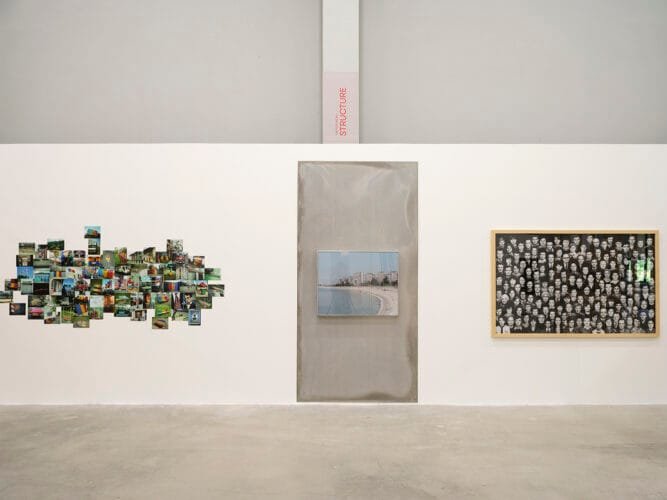
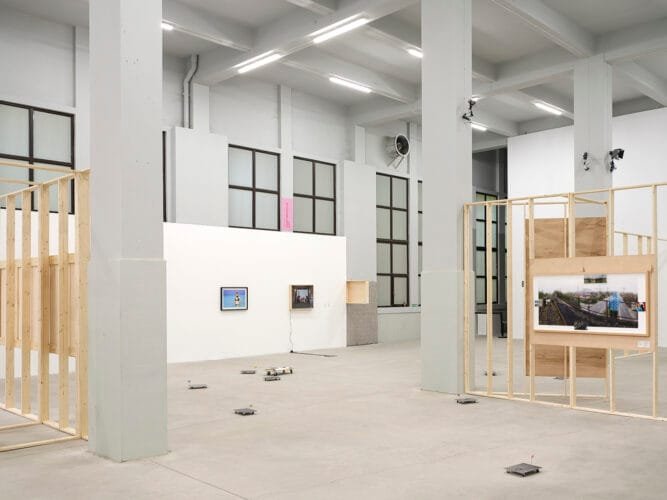
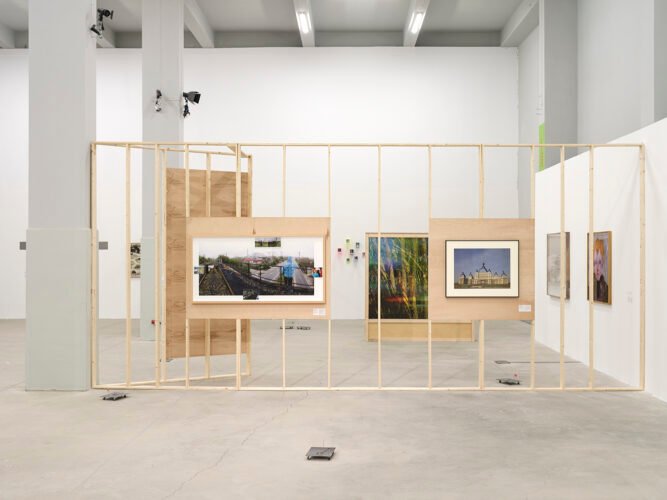
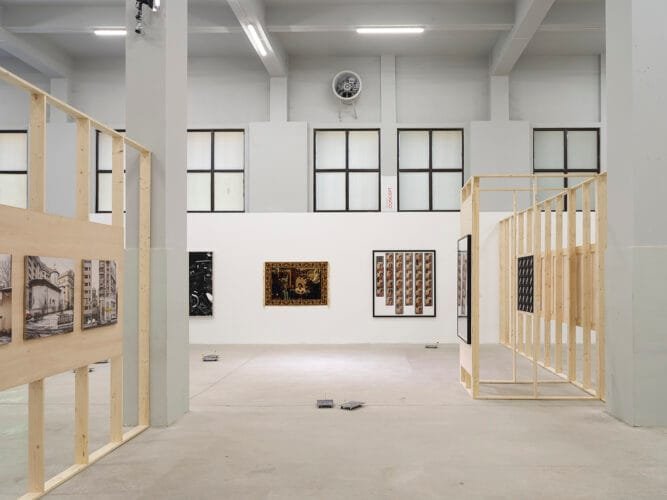
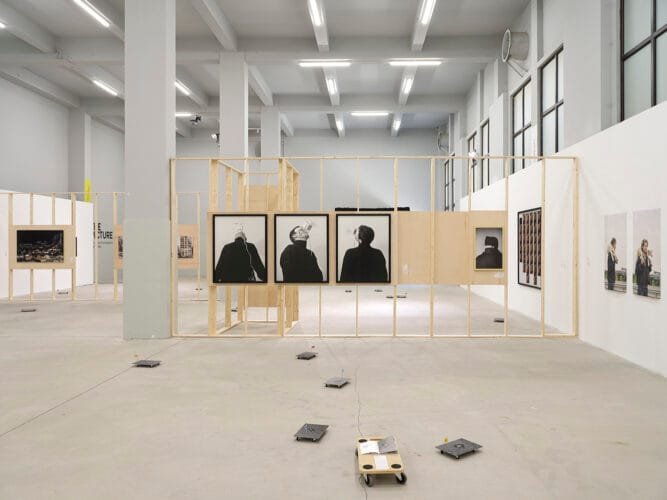
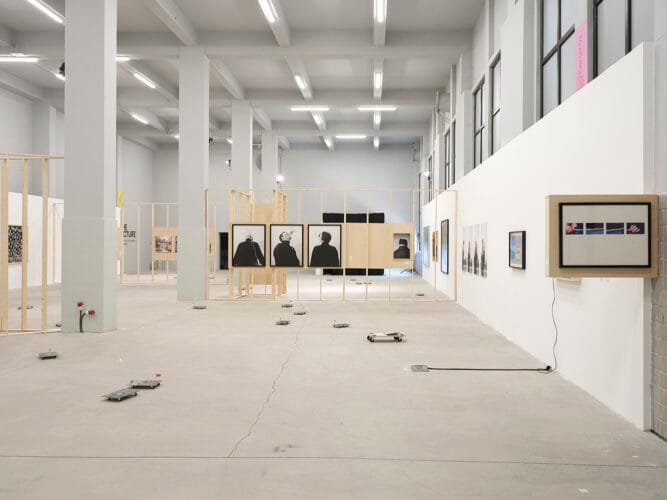
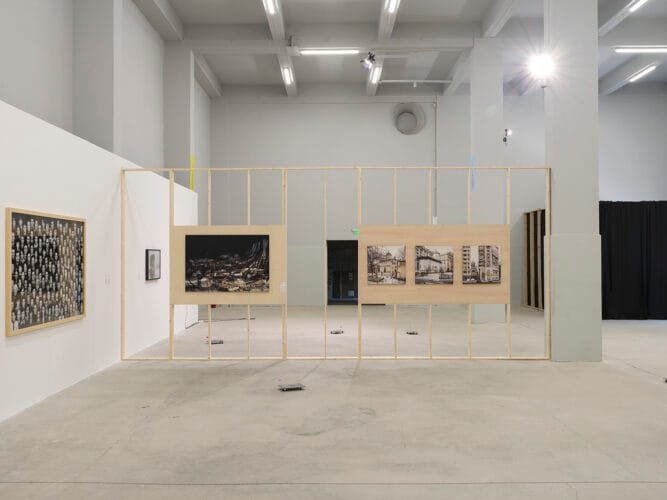
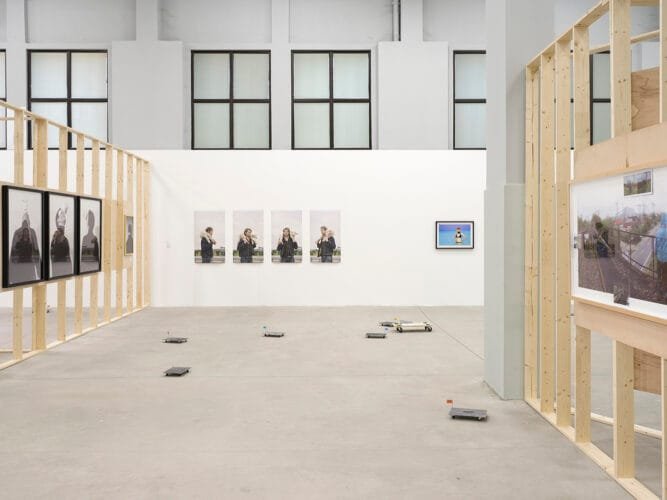
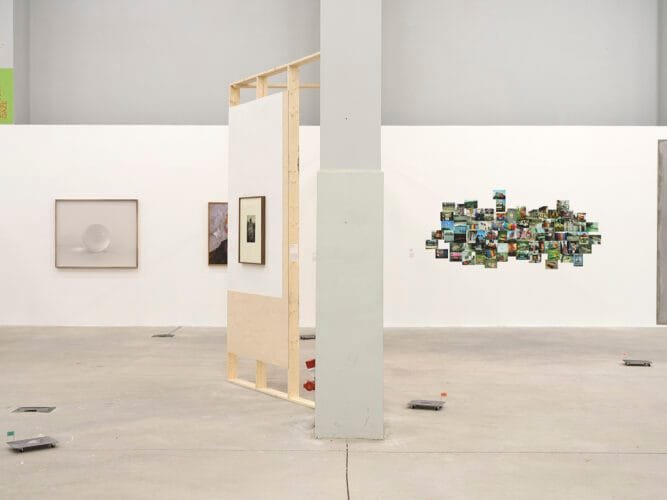
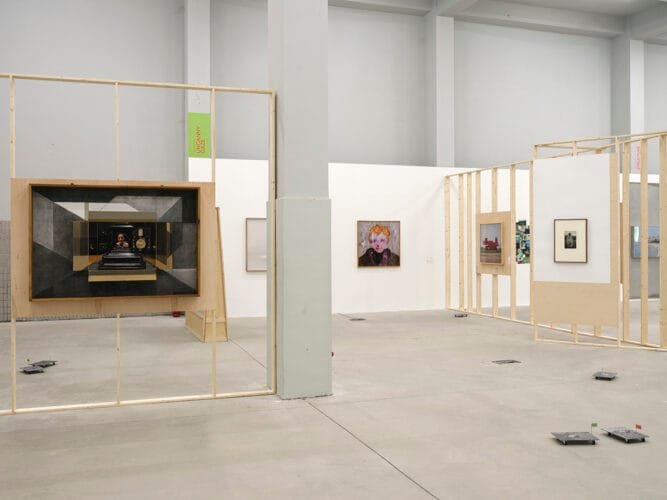
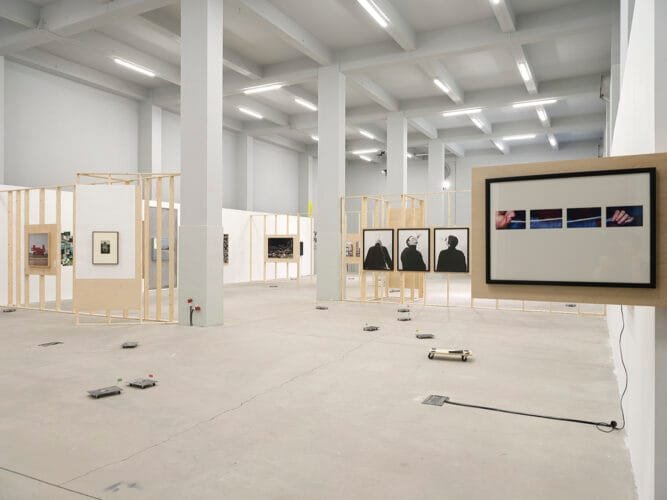
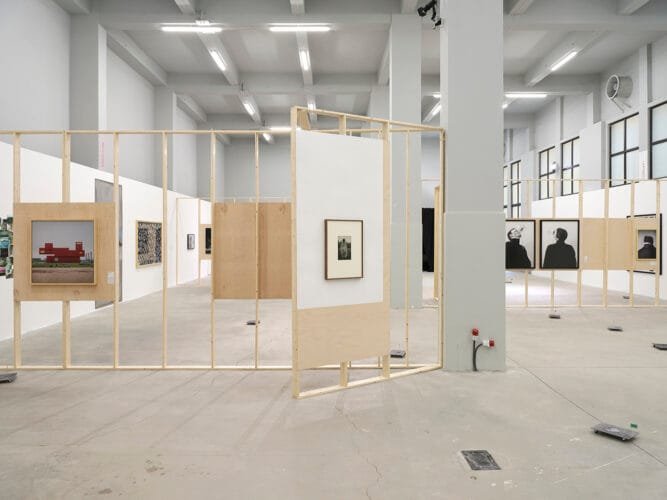
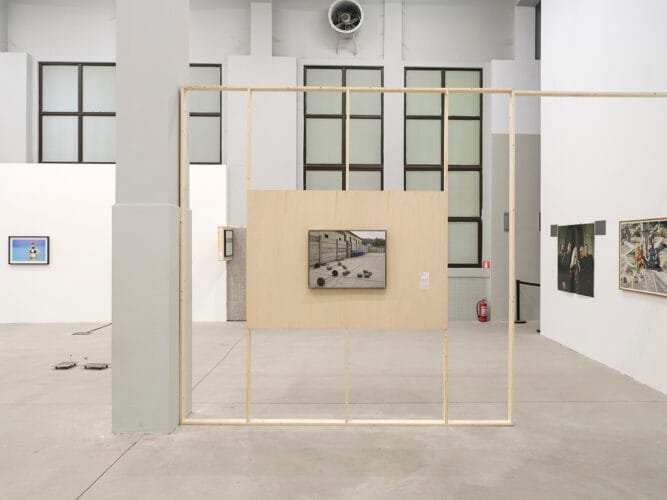
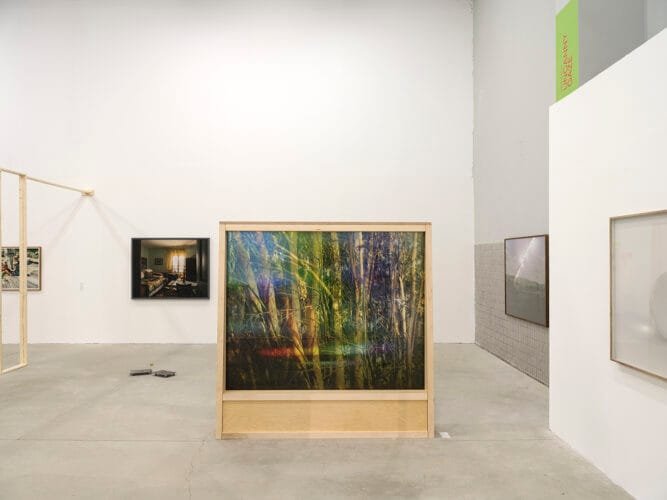
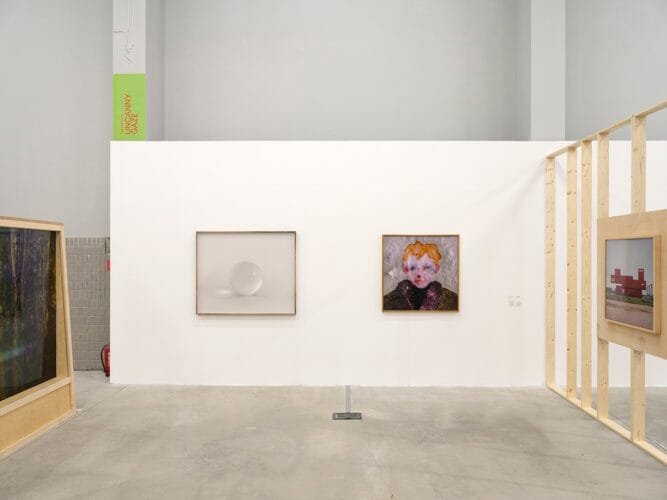
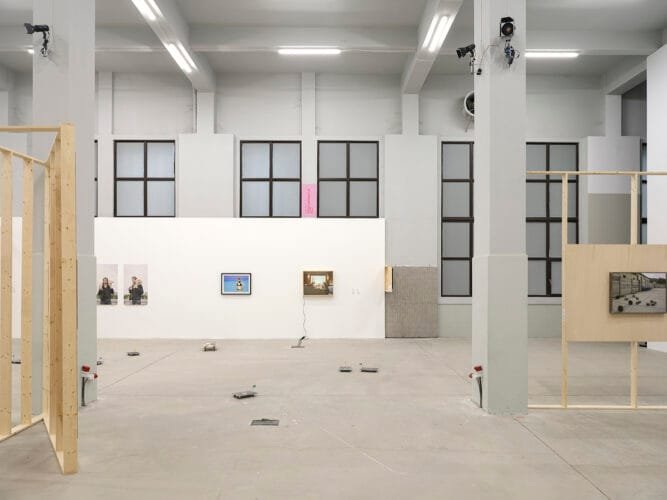
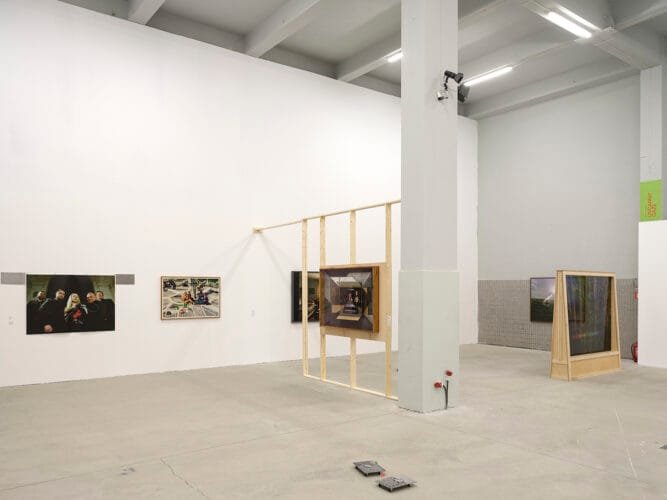
It is not often that I step into an exhibition where the history on the walls overlaps with a significant part of my own personal history. I was aware of the ambitious premise behind “The Picture. Explaining Photography in 39 Works,” a survey of art photography spanning roughly the last 35 years, but here I also discovered something akin to an artistic genealogy: my professors at UNArte, artists whose work I have long admired, friends whose practices have evolved before my eyes, all these figures become part of a broader narrative here, one encompassing the multiple lives lived by contemporary Romanian photography.
Without aiming to be exhaustive, the exhibition brings together an impressive number of artists and collectives, ranging from established names to more low-profile figures. However, rather than constructing a canon, a chronology, or a generational sequence, curators Horațiu Lipot and Dani Ghercă have approached photography based on what the image does, shifting the focus from style to function. In this regard, the host venue, Scânteia+ at the House of the Free Press, one of the most symbolically charged architectural landmarks associated with media, propaganda, and image production, does not seem like a coincidence.
The six proposed perspectives, the image as social document, historical testimony, concept, structure, performative act, and uncanny gaze, demonstrate the multiple roles photography plays within the national contemporary art scene. Despite this division into sections, the boundary between them remains intentionally porous, and the proposed route is also influenced by the gallery’s spatial possibilities. The works are not confined to fixed categories, nor do they propose a rigid taxonomy of photography; instead, the display allows adjacent sections to communicate with one another and to activate the environment in distinct yet inevitably intersecting ways.
“The Picture” begins with photography’s most familiar role, addressing the medium’s historical relationship with documenting the world, through images that show how social realities are always mediated by the photographer’s position, ethics, and aesthetic choices. Here, I was instantly captured by an iconic photograph by Ioana Cîrlig from the Post-Industrial Stories series, one of the most extensive and sensitive local documentary projects, placed near the angelic figures immortalised by Cosmin Bumbuț at Aiud Penitentiary. Further on, I catch sight of Ion Iliescu savouring french fries at the first McDonald’s opened in Romania, a shot captured by Ștefan Ioniță, alias Fane Jeg, known as the country’s first paparazzo. Displayed opposite it is a stark image from the first mineriad, of 1990, taken by Mircea Hudek, that clearly marks the transition into the realm of historical photography.
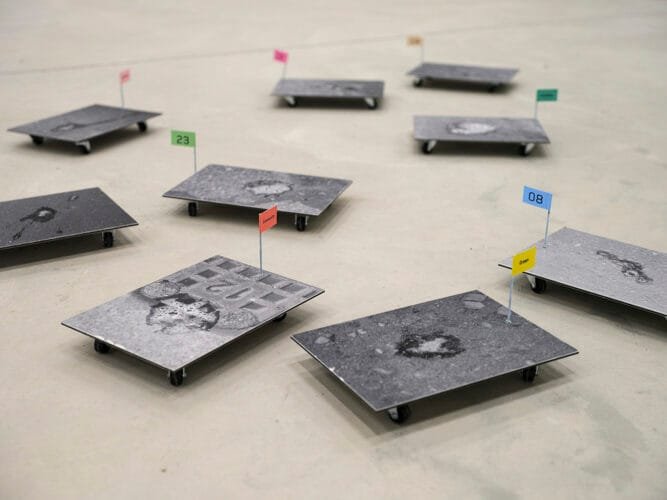
The exhibition sections overlap in terms of concept and structure as well, where photography opens itself further to experimentation. The image emerges as an installation, object, or still, expanding and occupying space. The photographs from the Campaign series by the subREAL duo were set on wheels and scattered across the gallery floor, while Tudor Bratu’s slide room introduces duration into the viewing experience. Here, I encounter visual artists such as Vlad Nancă and Mircea Cantor, whose practices extend beyond photography, as well as highly recognisable works, such as a piece from Iosif Király’s Synapses series, a composite landscape created by layering multiple moments and observation points. Further on, Dani Ghercă, Bogdan Gîrbovan, and Michele Bressan, each in their own way, explore the structural elements of architecture and urban space.
The last two sections captivated me the most, areas where the image transforms into a performative act or an uncanny gaze, featuring works that intervene subtly yet decisively in reality, allowing places, objects, and even people to become indeterminate. I was immediately absorbed by Alexandra Croitoru’s iconic self-portrait, featuring her exposed body and a face covered by the Romanian tricolor flag, an image that has stayed with me since my student days, placed in dialogue with the fractured, introspective self-portrait of Aurora Király; both are former professors from whom I learned how the body intervenes in, constructs, and often questions the image itself.
Until recently, I would have expected to see Virginia Lupu alongside documentary artists. Much of her practice was shaped by the relationships she formed within the communities she entered, whether involving sex workers or Roma witches. Today, she appears increasingly often in her own images, transforming lived experience into part of the artistic act without losing the authenticity that defines her practice. Last but not least, I was delighted to encounter the work of Andrei Mateescu and Lucian Bran, my schoolmates and friends, featuring photographs I know all too well. Each arrives at the uncanny through different means: Mateescu via subtle digital interventions, and Bran through analog processes that leave traces of light on the original negatives.
Seeing these familiar works now within the broader context of Romanian photography, I realise that the generation I belong to is, in turn, beginning to claim its place in this history. For me, “The Picture” transcends the status of a mere exercise in mapping the photographic landscape. It is also a reunion with the medium that shaped me and the artistic community in which I grew up.
“The Picture. Explaining Photography in 39 Works” [Scânteia+, Bucharest, 23.05–05.09.2026]. Artists Matei Bejenaru, Daniel Bocşe, Lucian Bran, Tudor Bratu, Michele Bressan, Cosmin Bumbuț, Mircea Cantor, Ioana Cîrlig, Petruț Călinescu, Alexandra Croitoru, Călin Dan, Irina Dumitrașcu Măgurean, Duo van der Mixt (Mihai Pop & Cristian Rusu), Bogdan Gîrbovan, Dani Ghercă, Daniela & Ioana Groza Pop, Eurorartist Bucureşti (Olimpiu Bandalac & Teodor Graur), Mircea Hudek, Nicu Ilfoveanu, Ștefan Ioniță (Fane Jeg), Bede Kincső, Aurora Király, Iosif Király, Anton Roland Laub, Virginia Lupu, Dragoș Lumpan, Andrei Mateescu, Aurelia Mihai, Ciprian Mureşan, Patricia Moroşan, Andrei Nacu, Vlad Nancă, Alexandru Paul, Szacsva y Pál, Mihai Plătică, Cristi Pogăcean, Anca Munteanu Rîmnic, Roxana Savin, subREAL (Călin Dan & Iosif Király). Curators: Dani Ghercă, Horațiu Lipot.


POSTED BY
Marina Oprea
Marina Oprea (b.1989) lives and works in Bucharest and is the current editor of the online edition of Revista ARTA. She graduated The National University of Fine Arts in Bucharest, with a background i...
marinaoprea.com
Comments are closed here.