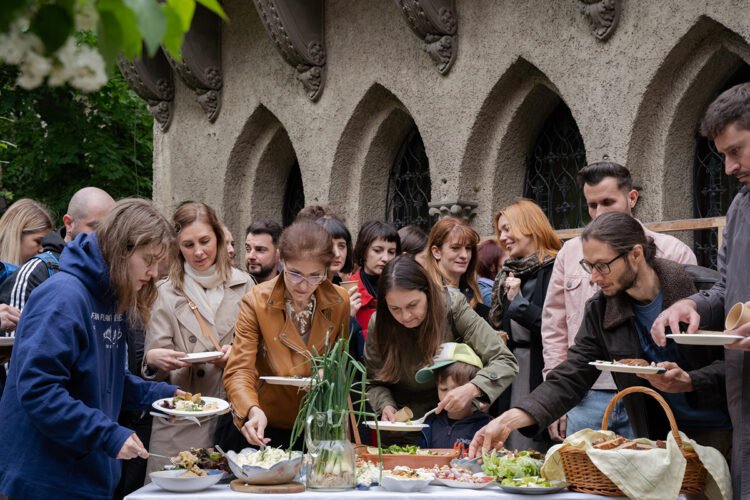
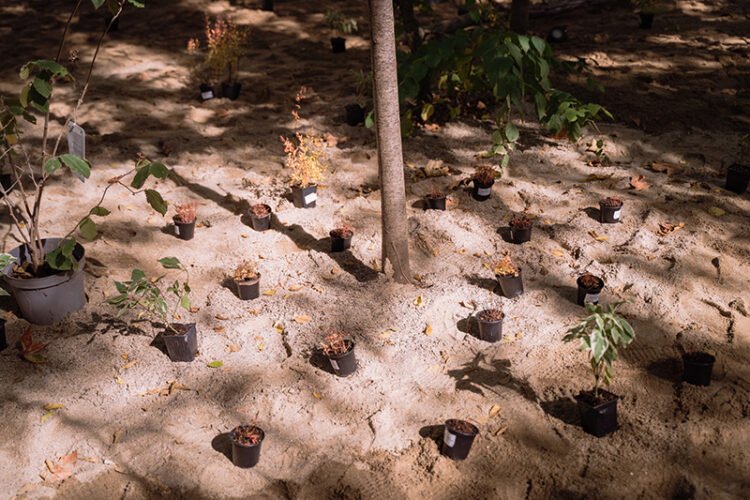
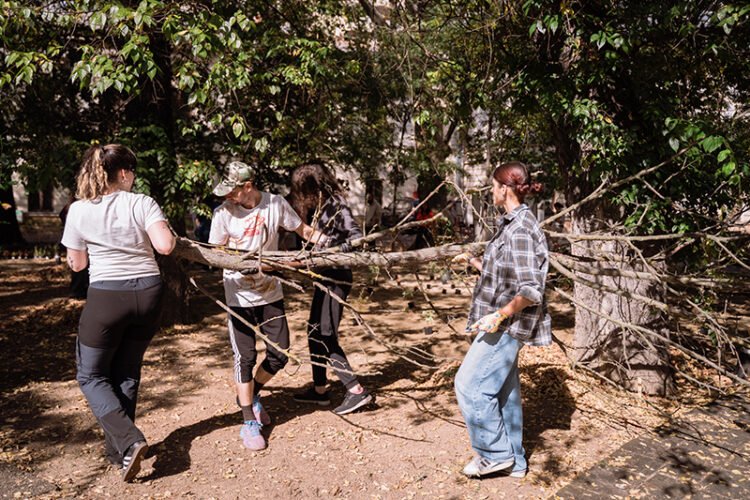
On a Sunday morning in the courtyard of Palatul Suțu in Bucharest, people are not going inside the museum, they are walking through a former fragment of a nineteenth-century botanical garden to listen to a DJ set, admire the garden, plant vegetation, and grab something to eat. There is no exhibition to inaugurate and no finished object to admire. Instead, the gathering unfolds as a collective process of observation and conversation. The project is based on the premise that the city does not necessarily lack green space; by contrary, known as a former “garden city” as described by XIX century travelers to Bucharest (Mexi, 2026) the city has its origin in a forest and tens of hectares of private gardens many of which became public before and during communism, and are currently administered by various public bodies: cultural institutions (museums, libraries, universities) but also financial and political institutions (ministeries, etc). What the city lacks is recognising these spaces as existing public health infrastructure and finding ways of protecting and preserving them while making them accessible to the communities that need them.
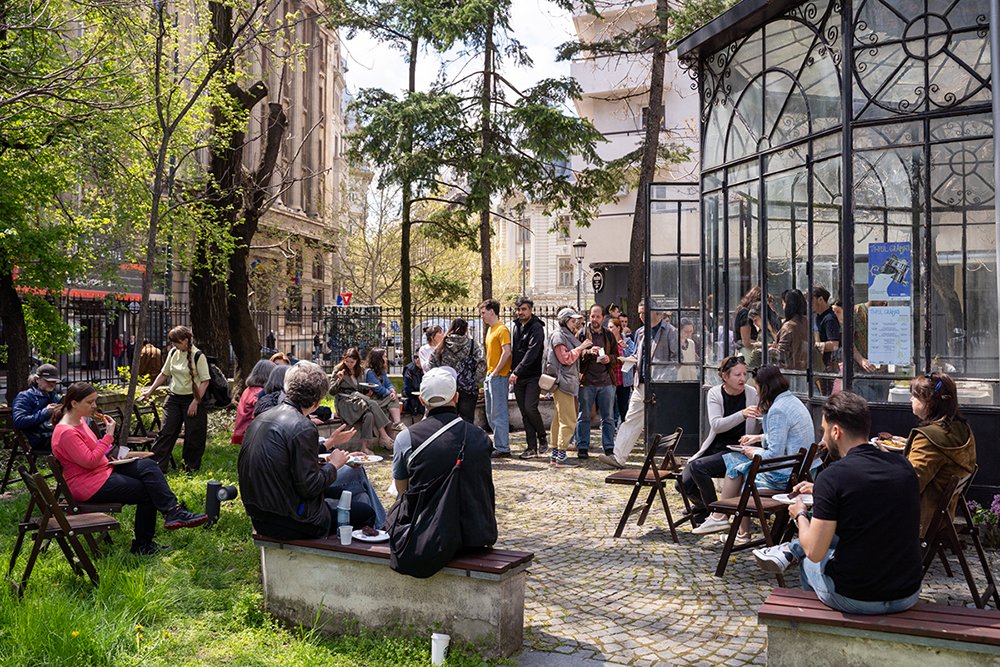
Launch of the “Garden Time” program, Suțu Palace, Bucharest City Museum, April 2026. Photo credit: Lavinia Cioacă.
This event, organized by Club Clorofila left me with the question: What does it mean to curate when climate change is already transforming everyday urban life?
For decades, curating has largely been understood as the practice of selecting and exhibiting artworks. Yet heat waves, biodiversity loss, pollution and climate anxiety are forcing cultural institutions to reconsider their role. Museums and galleries can no longer function solely as places where ecological crises are just presented on the walls. They are increasingly being asked to participate in shaping ecological futures.
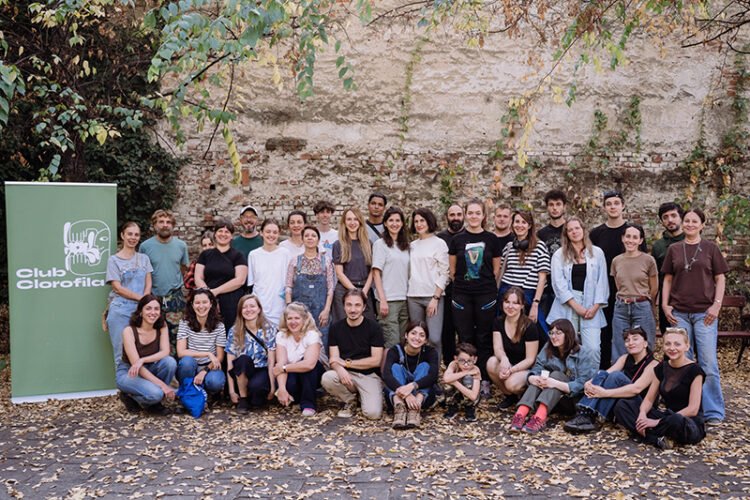
This transformation is visible in Bucharest through multiple initiatives coming from the cultural sector, as they try to integrate the new reality, either in gallery or museum exhibitions, talks, transdisciplinary collaborations and other. But 3 initiatives stand out through their sincerity in working with the environment and professionals: Stația SCAI, The Experimental Station for Research on Art and Life, and Club Clorofila. In this article I will focus on the practice of the lather, an independent initiative founded by cultural worker Cătălina Bolozan, an interdisciplinary practitioner focused on bringing participative practices and public space mediation into the curatorial process? More than producing exhibitions about climate change, Club Clorofila treats curatorial practice itself as a form of climate adaptation, working with neighboring communities and public institutions (museums, local authorities) to transform neglected green public space into actual gardens that the community can care for and enjoy. Its projects suggest that the curator of the twenty-first century may become more than just exhibition-maker, but also a facilitator, a steward of relationships.
The climate crisis has become a familiar topic within contemporary art. Biennials, museums, residency programs and open calls increasingly foreground sustainability, eco-activism, ecological collapse and environmental justice as their main themes. Artists have responded with urgency, producing research-based projects that explore humanity’s relationship with the planet, as we see their work everywhere. Yet this growing visibility also exposes a contradiction. International exhibitions often depend on global shipping, temporary architecture, energy-intensive production, works that are produced with polluting materials and techniques or short-lived scenography. While they successfully raise awareness, they also prompt uncomfortable questions about the environmental footprint of the very systems through which art circulates. Perhaps the more interesting question is no longer how can art represent climate change, but how can curatorial practice itself become part of climate adaptation?
It’s not just about treating sustainability as a theme, as some curators have begun to rethink the structures through which cultural production takes place. One influential example was documenta fifteen, curated by the Indonesian collective ruangrupa, whose concept of lumbung proposed collective resource sharing and long-term collaboration instead of individual authorship and spectacle. Their project demonstrated that sustainability could be understood not only environmentally but socially and economically, as a different way of organizing institutions and sharing resources. Club Clorofila approaches similar questions from a very different scale. Instead of reimagining one of the world’s largest exhibitions, it begins with a neighborhood, a neglected garden and the people who already live there.
Cătălina Bolozan’s own trajectory reflects this shift. Earlier in her career she worked as a curator with Modulab, the art and technology lab that put this intersection on the collective imaginary of Bucharest and with them produced two editions of Liminal, Bucharest’s first art and technology festival. The project brought together artists, designers, philosophers, chefs and musicians in previously unexplored museums and gardens to speculate about what it would mean to live a good life in a post-future that we were highly unprepared for. Today, her work starts somewhere else entirely. Instead of asking which artists should be invited to represent a theme, she first asks what these forgotten, sometimes abandoned, public spaces need and begins with the communities that already surround them.
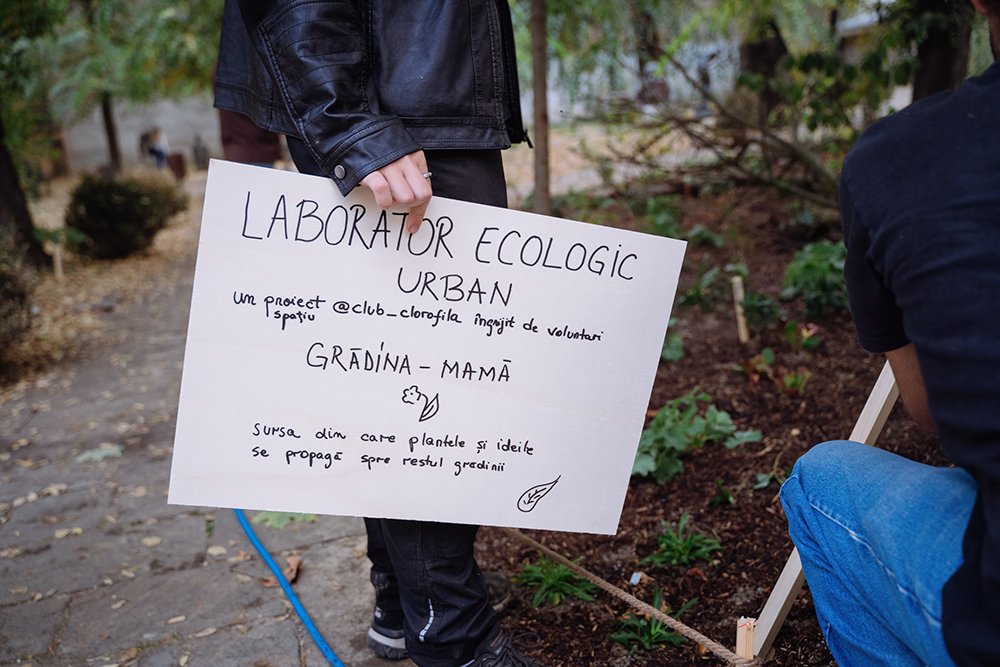
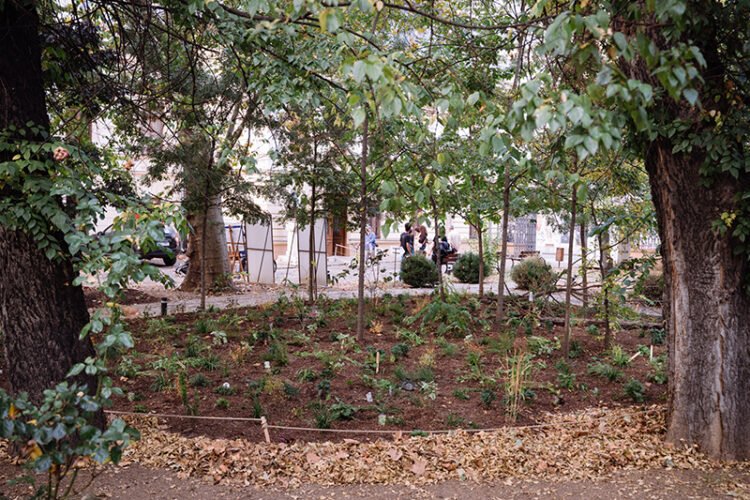
The garden of the Filipescu-Cesianu House, October 2026. Photo credit: Lavinia Cioacă.
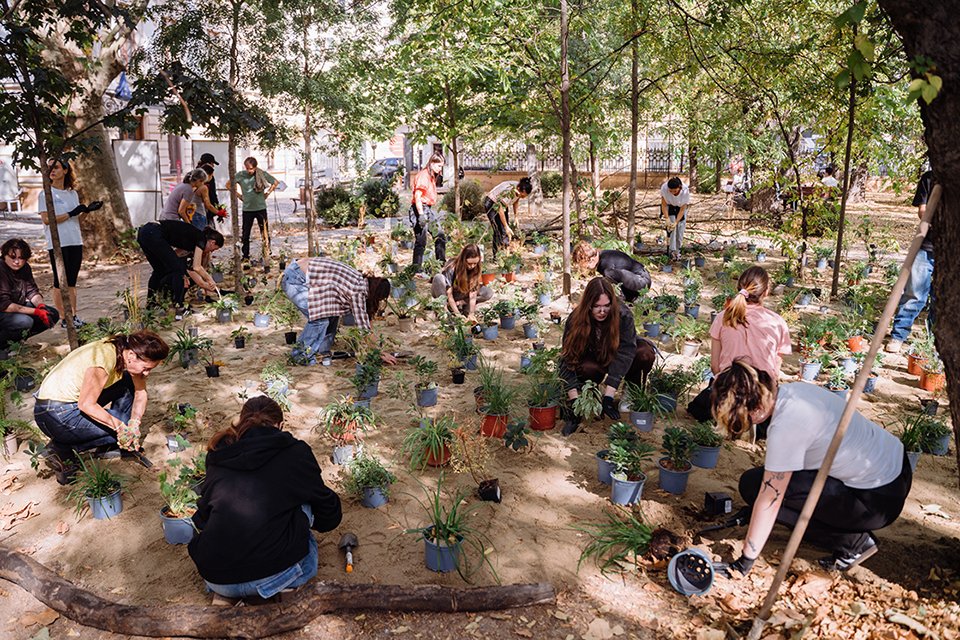
When the answer is a garden, she assembles a team of urban practitioners: researchers, landscape architects, urban designers, social scientists and others who can help understand the space from different perspectives. Together, they investigate its past and present in order to imagine, and eventually shape, a desired future for the space. They begin in the archives, looking at the history of the place, how it was designed and used, and asking whether those historical functions are still relevant today. At the same time, they look at how the space is actually being used in the present: who comes there, who feels welcome, who is missing, and what different communities need (from the neighbors, passers by, the people working in these institutions). The solution is rarely a quick intervention. More often, it is a long-term participatory process that requires co-governance, alongside institutional commitment and political cooperation, that in the end leads (utopically) to ecological and social transformation. Real change, in this model, cannot be produced by a cultural programme alone, it requires collaboration across different forms of knowledge and expertise. It is at this point that artists and other creative practitioners enter the process. Artistic practice becomes one of the languages through which the project can unfold: from food, music, movement, horticulture, visual art, storytelling to other forms of collective making. The artist is no longer necessarily brought in to make a work about a place, but the artistic process becomes a way of working with the place.
Across 3 consecutive projects in Bucharest at The National Museum of Map, The Suțu Palace and Casa Filipescu-Cesianu, (the last two part of the Municipal Museum of Bucharest), Club Clorofila reimagined these green spaces as more than decorative heritage. For them it is the foundation upon which the project is built, more than as an educational program attached to an exhibition, or a strategy for audience development. And success is not required nor needed, the activism of trying is maybe more than an exhibition could leave behind in terms of actual change.
The result is that the work does not end when a public program closes, fundamentally changing the role of the curator. Gardens continue to grow. Volunteers return. Museum staff acquire new knowledge about ecological maintenance. Communities retain ownership of spaces they helped transform. The legacy is more than cultural.
The project “The time of the Garden” that ended at the end of June invited residents to rediscover the courtyard of Palatul Suțu in Bucharest through guided walks, affective mapping workshops, community meals and collective gardening.
Cătălina is working now on “Climate Emotions”, a project that addresses the emotional transformations brought by climate change and approaches building emotional resilience as a strategy for climate adaptation. The 2000sq garden at Casa Filipescu-Cesianu Museum, on Calea Victoriei 151 Bucharest, is used for introducing the idea of a community garden as a climate refuge and an “infrastructure of care.” At the launch event of the programme, local communities, creative professionals, activists and public workers were invited in the garden to find solutions for the wellbeing and mental health of its citizens, putting the climate crisis and collaboration at the center of the conversation. In her view, climate anxiety is not just an individual problem, but a shared social experience that takes place as we become witnesses to the ecological disasters that are happening around us. But this anxiety also holds the potential to be transformed into collective action, if hope and collective participation are activated, according to her.

Climate change challenges not only what museum’s exhibit but what they are responsible for. And Club Clorofila does not claim to solve the climate crisis. Its projects are local, modest and deliberately situated very close to a small community, because it is focused on delivering long-term action and change. The organisation’s work shows how cultural institutions can become places where climate adaptation is practiced rather than merely discussed. They invite us to imagine curating as more than the production of temporary exhibitions, but as the long-term cultivation of places where actual ecological knowledge and collective civic care can take root.
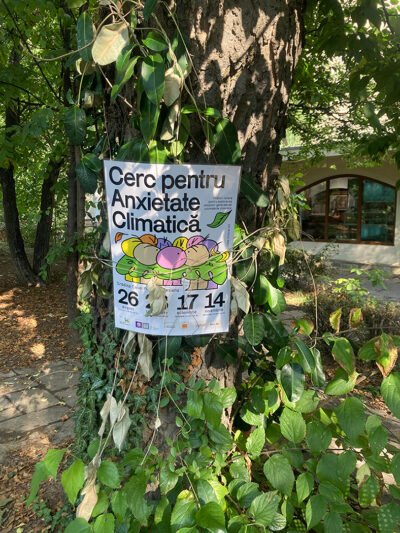
From August to November Club Clorofila has been organizing in the garden of the Filipescu-Cesianu House “Climate Anxiety Circle” —a series of meetings dedicated to exploring the emotions generated by climate change and how they can become resources for care and civic engagement.


POSTED BY

Gabriela Mateescu
Gabriela Mateescu is a Romanian artist and author who lives and works in Bucharest, working with video, installation, drawing and performance. Her work is feminist, autobiographical and self-referenti...
spam-index.com/