During the last weekend of May, the popular annual “Gallery Weekend” takes place in Paris, marking its 13th edition in 2026. The event has been organized (since 2021) by the Comité Professionnel de Galeries d’Art (CPGA) in the format of an art fair without a “fair,” where the shared space is immaterial: a program conceived individually and promoted collectively. This type of alternative fair, which inherently also includes urban tourism, takes place annually in several metropolises where an active ecosystem of contemporary art galleries exists, offering the public the opportunity to discover, with guidance, spaces located in different parts of the city within a short period of time. This year, the Parisian Galleries Weekend program included 77 venues (73 participating galleries) that offered the public a varied program of exhibitions, artist talks, conferences, book launches, guided tours, and parties organized along eight geographical routes. During the last weekend of May this year, Paris was overwhelmed by a heatwave, a heatwave said to be unlike anything seen in the last century.
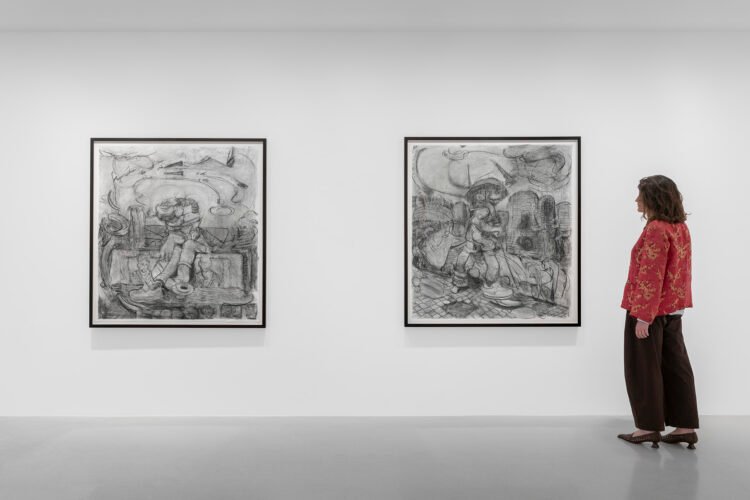
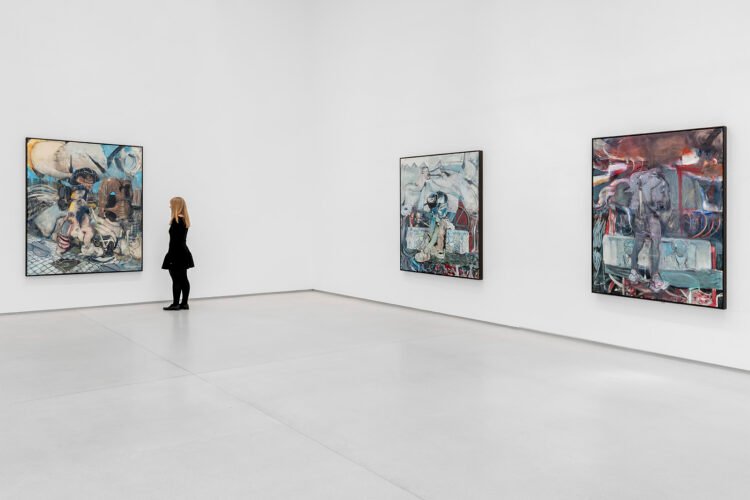
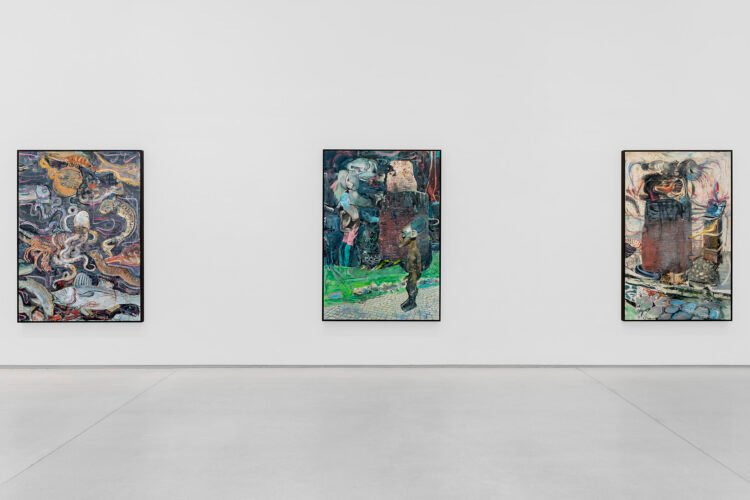
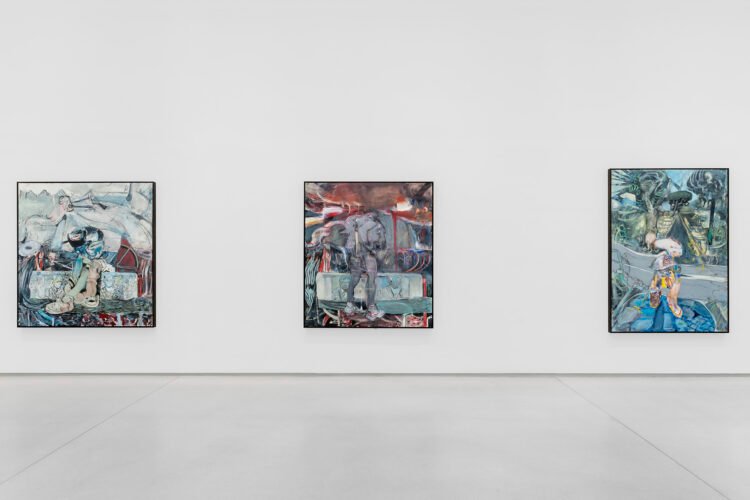
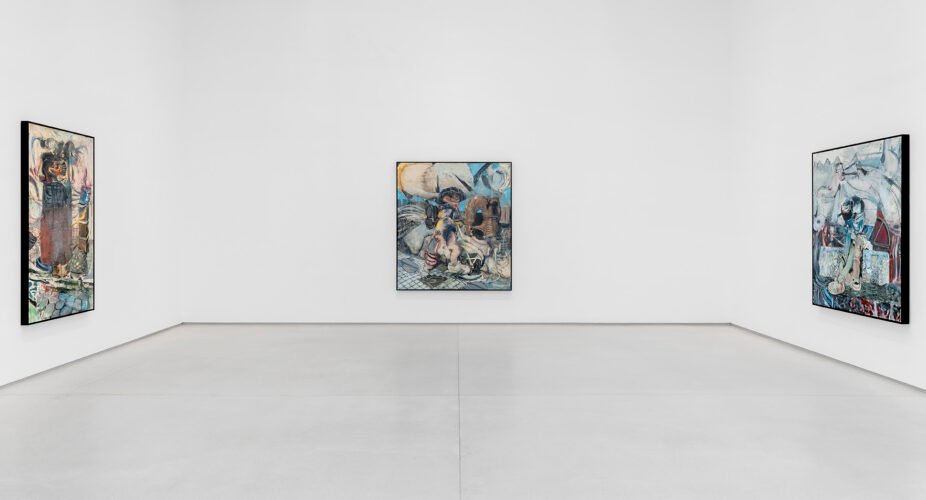
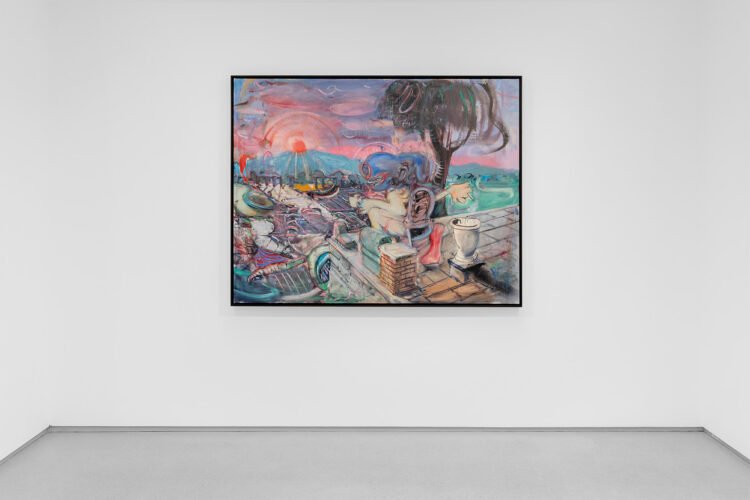
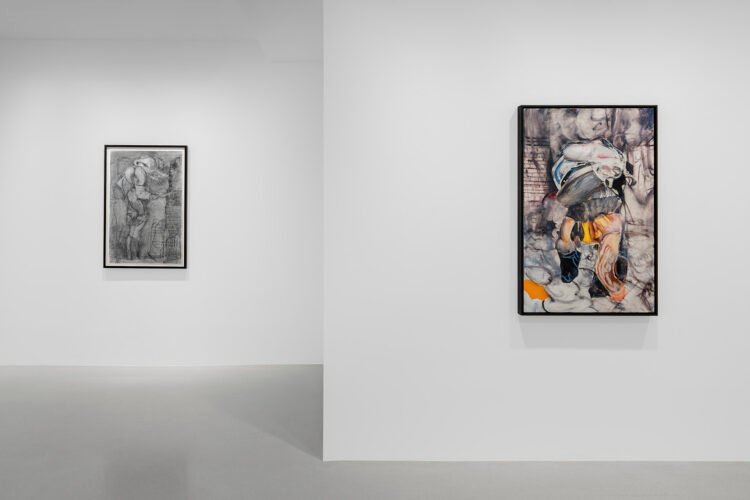
In the tight streets of the Marais neighborhood, in the heart of Paris, where vegetation is completely absent, the heat seems to wrap you up from all sides, rising from the street pavement and the walls of buildings heated by the fierce sun; it gets inside your body, and it feels as if every cell is expanding, softening, melting away a little. The heat alters your perception; your vision seems to become blurred, less able to focus on the details around you. At the Thaddaeus Ropac Gallery in the Marais, Adrian Ghenie presents an exhibition inspired by the torrid landscape on the outskirts of Rome. Fragments of the sun-drenched landscape, laden with ruins from the Roman countryside, appear in compositions that deconstruct the view. Through these fragments, space is both constructed and deconstructed, becoming suggested rather than defined. Fragments of Mediterranean vegetation, architectural ruins, pieces of pavement, or fragments of a human body melt into abstraction before taking on a concrete form. Adrian Ghenie’s landscapes unfold like a dream. Under the influence of the sweltering heat outside, I told myself that this view of the landscape finds its realism in a scene that is often torrid.
The French philosopher François Jullien notes in his essay exploring the nature of landscape, Vivre de paysage, that in European culture: “(…) landscape is conceived in relation to sight; the fact that [the landscape] is, as its original definition states, what nature ‘presents to an observer,’ is not due solely to some Greek privilege accorded to visual perception—in which we stubbornly persist in believing—but rather stems from this obvious truth: that we arrive at the landscape by looking.”[1]. So, what does Adrian’s gaze take in from the Romanian countryside? In an interview with RFI, Ghenie describes the impact of the Mediterranean landscape: “Back then, standing there, I understood where what we call the ‘classical landscape’ comes from, but the classical landscape in the 17th- and 18th-century sense, that idealized image, which eventually became kitsch later on. But ultimately, this ideal, classical, pastoral landscape is exactly that. It’s a painter from the north who travels south and discovers it; it’s the first time this idea is brought to life on canvas: the outdoors inspires us, it doesn’t frighten us. In the north, the outdoors somehow frightens us. You can clearly see the difference in the painting.”[2]. Adrian Ghenie’s gaze turns toward a landscape of memory, a landscape composed of scenes that overlap through various historical layers. Landscape is a genre that dates back to Greco-Roman Antiquity in European painting, but it has been devalued over time within the academic hierarchies of painting, which favored the depiction of the human figure. The classical landscape, in the style of Poussin or Lorrain, is constructed in a symbolic register; nature is an image organised according to an ideal of beauty… that is unnatural. In the classical landscape, nature serves as a setting for a historical spectacle, marked by a fetishization of Antiquity. Adrian Ghenie is currently working on the Via Appia, one of the oldest paved roads of the Roman Empire (hence the saying, “All roads lead to Rome”). Over the centuries, the Via Appia has often been a subject in painting, especially in classical landscape art. In the 17th and 18th centuries, the Roman countryside was one of the great breeding grounds for European classical landscape art. The Via Appia can be viewed as a source landscape, the place of origin of an ideal of classical beauty.
In the paintings and drawings brought together in the exhibition “Roman campagna” at the Thaddaeus Ropac Gallery, Adrian Ghenie deconstructs this ideal landscape, fragmenting it into evocative details. Ghenie works within the tradition of the “capriccio” landscape, which draws on recognizable elements that he freely recomposes into imagined worlds. His painting brings the capriccio landscape into the contemporary realm. While classical painters constructed an ideal landscape, Adrian Ghenie transgresses the classical element and transforms the landscape domesticated by art history into an unstable nature. His landscapes are not enchanting views. Ghenie reworks elements from the grammar of the classical landscape, takes recognizable elements that have become iconic, and filters them through his own pictorial vocabulary, employing distortions, Baconian erasures, and abstractions.
While classical landscape painting seeks to confer a sense of timelessness on the image, Adrian Ghenie incorporates recognizable signs of the present: a laptop amid ruins, a distorted silhouette wearing Nike-branded shoes (likely self-portraits), backpacks, umbrellas, an ashtray, and hiking poles. For example, in the work The Shepherds of Arcadia (2026), Ghenie returns to one of the foundational images of classical landscape painting: Nicolas Poussin’s Et in Arcadia Ego. In Poussin’s painting, shepherds discover a tomb in the midst of a pastoral landscape and pause before it, in a scene where the beauty of Arcadia is juxtaposed with the inevitability of death. In pastoral mythology, Arcadia, a region of ancient Greece, was associated with paradise lost and became an imaginary ideal. Adrian Ghenie assembles his own memory of the landscape: Poussin is blended with references to modernism, Picasso, de Chirico, and postmodernism, such as Francis Bacon. A silhouette solemnly urinates on a grave. It is precisely this juxtaposition that creates the transgression: the body and the monument, the physiological and the funerary, the profane and the pastoral ideal, art history and everyday life all come to occupy the same image. With the exception of an underwater landscape, Octopus Fighting a Lobster (after a Roman mosaic), in which the artist reinterprets an ancient image, the exhibition “Roman campagna” brings together a series of landscapes that, through the artist’s personal approach to memory, can be viewed as journeys inward. An art history enthusiast, Adrian Ghenie blends references from art history according to a deeply personal logic: “On one hand, I work on an image in an almost classical vein: composition, figuration, use of light. On the other hand, I do not refrain from resorting to all kinds of idioms, such as the surrealist principle of association or the abstract experiments which foreground texture and surface.” (Adrian Ghenie quoted in the press release issued by Thaddaeus Ropac Gallery.).
As stated in the gallery’s press release, the exhibition “Roman campagna” marks “a decisive shift in the artist’s practice, drawing inspiration from landscape painting both in terms of subject matter and form.” Adrian Ghenie offers a personal approach through which he reinterprets the history of the European landscape in images that continue the figurative-abstract visual exploration he has pursued in recent years.
[1] François Jullien, Vivre de paysage. Entre les montagnes et les eaux, Editions Gallimard, 2014, p. 39
[2] Adrian Ghenie, interview – https://www.rfi.fr/ro/fran%C5%A3a/20260421-adrian-ghenie-aduce-roman-campagna-la-paris-exclusivitate-rfi


POSTED BY
Valentina Iancu
Valentina Iancu (b. 1985) is a writer with studies in art history and image theory. Her practice is hybrid, research-based, divided between editorial, educational, curatorial or management activities ...