Among the exhibitions that went unnoticed last season is “One, Two, Tree” by Belarusian-born artist Yury Beryozkin at SOLO—opened on June 12, 2026, at the conclusion of his ARC residency in Bucharest—featuring a curatorial text by Bianca Băjenaru.
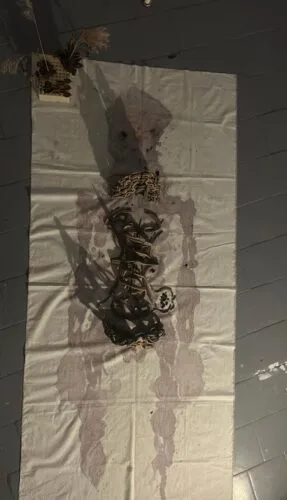
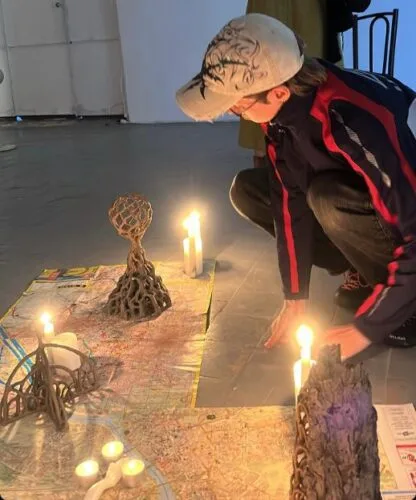
The exhibition is set against the backdrop of a novel the artist is working on, featuring a tree, not one known as the “Tree of Life,” but one harbouring an entity that enables eternal life, while also provoking the fears of a dystopian government that begins to poison the species. What is visible in the gallery space is a quest to envision what such a tree might look like, a quest that begins in Mesopotamia. The forbidden fruit is linked to Inanna and the discovery of one’s own power and sexuality, and the search continues through the many belief systems that followed, spanning the globe and taking on various forms: the biblical Tree of the Knowledge of Good and Evil, serving as a bridge between heaven and earth; the peach tree of Chinese tradition that bestows eternal life, representing an energy that never fades, and so on. Moving beyond a basic visual level, the artist arrived at sacred geometry and then translated the tree into ceramics, seeking to understand how it might physically grow, how it is held by gravity, and how it might collapse.
“The tree is a symbol of both the separation and the connection between three levels: the surface, the roots, and the crown. It is an intermediate space, something between the trunk and what lies hidden beneath, between the world below and the world above. In many systems, the tree appears as a rupture between the realm of life and something else, but also as a point of passage between dimensions. It was precisely this idea that interested me: the tree as a structure that allows us to step out of ordinary reality,” says Beryozkin.
“I work extensively with archives. I have my own archives, which I carry with me and from which I constantly select elements for my research. At the same time, I seek inspiration directly from the place where I happen to be, because it is important for me to read the space and its energies,” says the Belarusian artist.
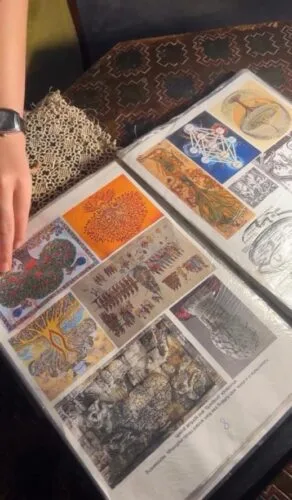
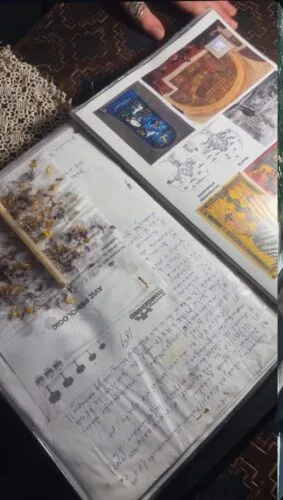
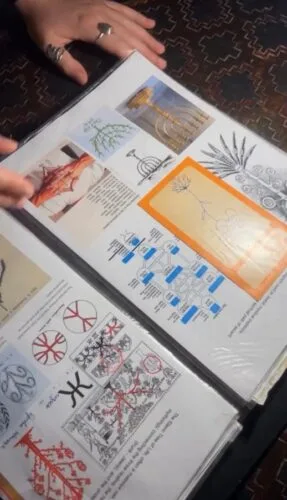
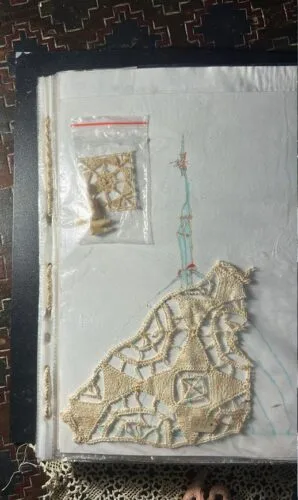
In Bucharest, Beryozkin happened upon discarded objects, documents, and seemingly useless fragments, which he integrated into his work as a form of material memory. These materials were assembled into a book or various installations to evoke a more human, embodied dimension, one closer to memory and psychology.
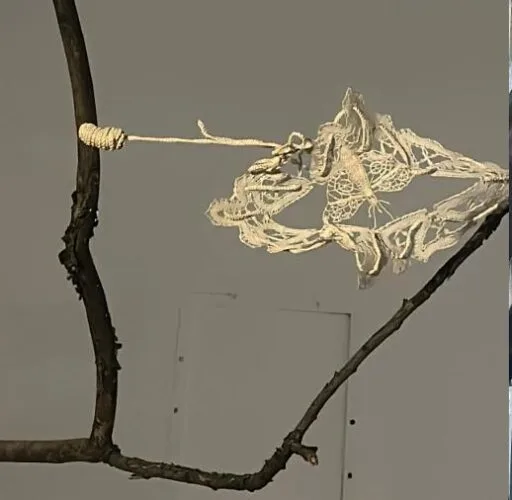
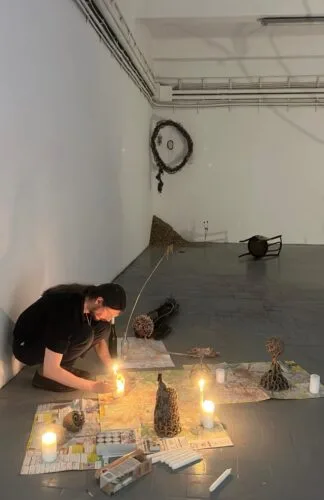
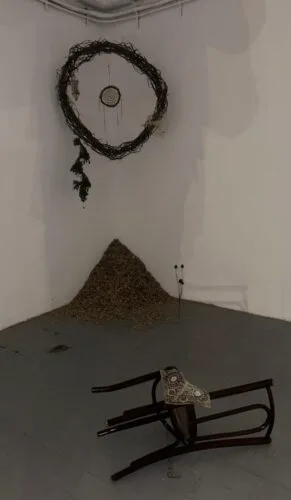
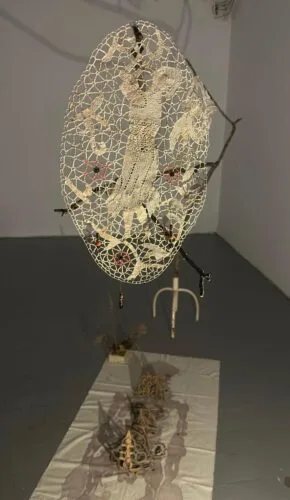
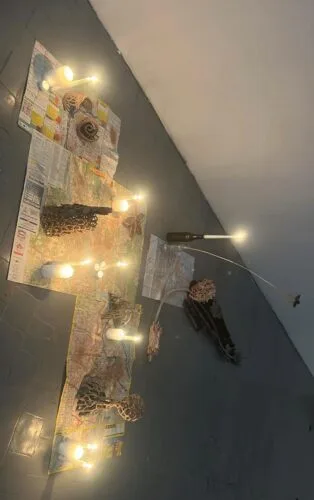
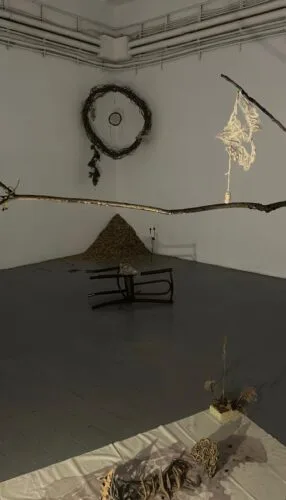
The first object created in Bucharest was a circular structure made of branches and vines, inspired by the concept of a “round” reality, the antithesis of the pyramidal hierarchy we typically inhabit. The aim was to create a form that moves, transforms, and evolves, rather than one that is rigid and static. Later, Beryozkin experimented with glazes derived from ash and plants gathered near the studio; the resulting texture resembled mold or mycelium, forms of life that grow in silence. He also incorporated old city maps into his ceramic constructions.
“The tree from the novel that inspired me is a colossal, almost technological structure that grows through the planet’s atmosphere, striving to reach space. Humans, however, hinder and poison it. That is why, in my work, I have sought to combine the scale of a city with the concept of this living megastructure. Some of my pieces have approached the form of a very fragile Tower of Babel, while others resemble a mangrove-inspired structure with stable, organic, external roots. I particularly enjoyed showing how a form can be simultaneously natural and constructed, solid and vulnerable.”
The exhibition also features a video-poem that speaks from the tree’s perspective: it looks down upon humanity and seems almost irritated at having to be translated into human language, as our tongue is too limited to capture its essence. The text conveys the idea that we are part of the same system, even if we do not realise it. The video draws inspiration from the concept of emergent complexity and the models created by Anglo-American physicist and mathematician Stephen Wolfram. The renderings are based on a website created by Wolfram and attempt to explain the universe through simple formulas and systems that evolve unpredictably on their own, much like a living organism. (“You are my child, but I am not your mother. Neither the godlike absolute absurdity of the father. I am the one you always wanted to call in the moment of stagnation, in loneliness at the front of the underworld gates.”).
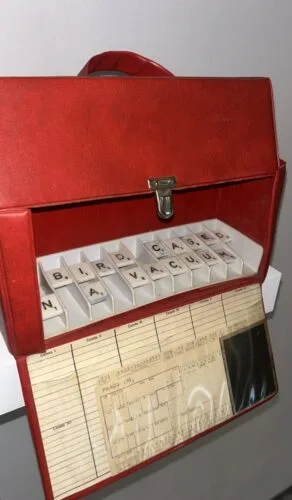
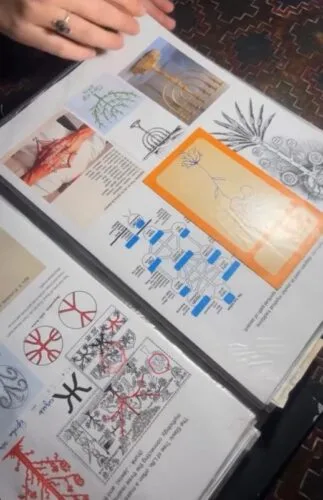
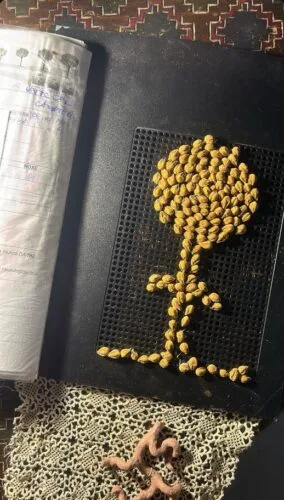
The book featured in the exhibition also includes miscellaneous documents found in the vicinity of the artist’s studio at Malmaison, located in a former hospital wing. There, I discovered discarded papers related to medical and psychological examinations, the institution even used a tree as its logo. Medical records were interspersed with various depictions of the tree of life and the seeds of life, along with all their possible transmutations. Finally, a tree made of seeds is actually embedded in the inside cover.
One of Beryozkin’s sources of inspiration is a sci-fi novel by Starhawk, The Fifth Sacred Thing, which envisions a circular society connected to nature, closer to solarpunk than to utopia. I found the book important because it speaks of survival, ecological trauma, and forms of coexistence different from the current world.
Another influence is the artist Katalin Kortman-Jaraj, whose works centered on the Tree of Life focus on form: more refined, controlled, and “crafted,” yet following the same conceptual direction as Beryozkin. At the same time, the artist was also impressed by the Museum of the Romanian Peasant; as Berezkin confides, “I saw an exhibition there that drew connections between the tree, the six-petaled flower, and sacred geometry. It was a very powerful moment for me, because I felt that the city itself was confirming my research.”
Unfortunately for the artist’s work and for the public, the exhibition was not promoted or documented as it deserved to be. There was an opening, and it was likely open for private viewings, but the gallery space remained closed and no closing date was announced; the public was thus deprived of an exhibition that could certainly have intrigued many viewers.
“One Two Tree” [SOLO, Combinatul Fondului Plastic, Bucharest, 12.06.2026–undefined]. Artist: Yury Beryozkin. Curatorial text: Bianca Băjenaru


POSTED BY
Bogdan Bălan
Bogdan Bălan is a cultural journalist, art critic and cultural worker. He has collaborated with Goethe-Institut, Savvy Contemporary, Scena9, among others....